
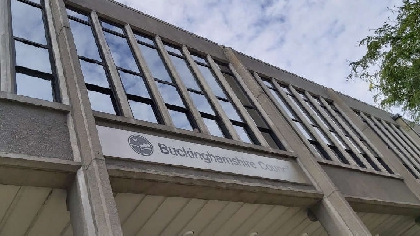
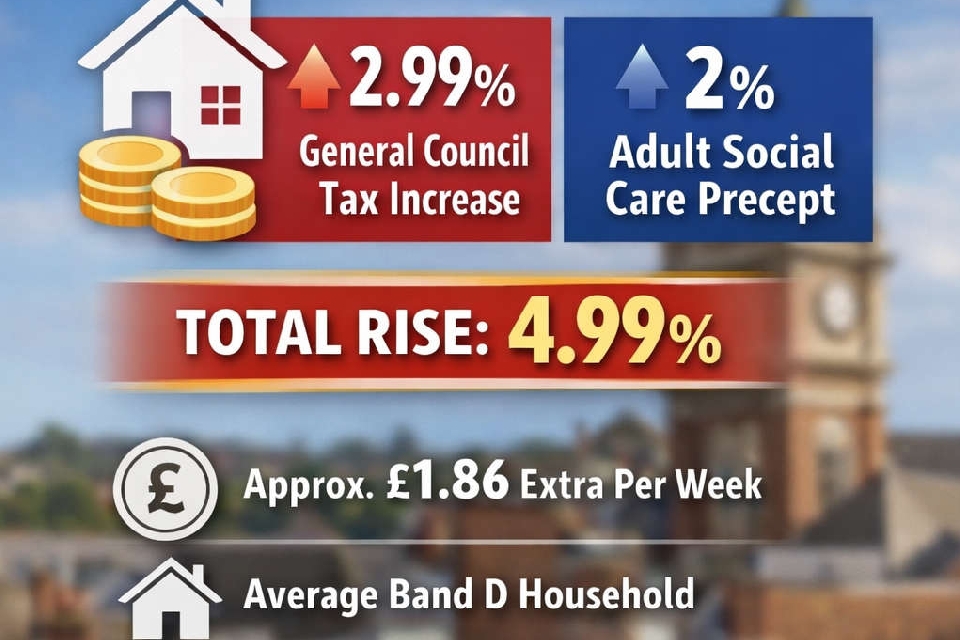
Council tax bills in Buckinghamshire are set to rise by up to 4.99 per cent next year under draft budget plans approved by the council’s cabinet.
The cabinet-approved medium-term financial plan assumes the maximum council tax increase allowed without a referendum for 2026–27, made up of a 2.99 per cent rise in core council tax and a 2 per cent adult social care precept.
The council says the increase is necessary to help balance the books amid rising demand for statutory services and a sharp reduction in funding as a result of government redistribution.
It expects to lose £44.4 million by 2028–29 as a result of the Government’s Fair Funding Review, which reallocates funding away from Buckinghamshire under a revised needs-based formula.
Because Buckinghamshire raises a comparatively high proportion of its income from council tax relative to its assessed level of need, it is expected to lose out under the new funding system.
Despite the assumed council tax rises, the council’s overall core spending power is forecast to increase by just 8.1 per cent over the next three years, barely above expected inflation and well below the national average increase of 15.1 per cent.
Without the assumed annual 4.99 per cent council tax increases built into the Government’s funding model, officers warn the council would face a further £30 million funding shortfall.
Overall, the authority says it must close a further £109 million budget gap over the next three years through a combination of savings, efficiencies, additional income and council tax increases in order to produce a legally balanced budget.
More than three-quarters of council spending is concentrated in five service areas, including adult social care, children’s services (including special educational needs and disabilities), home-to-school transport and temporary accommodation, with demand continuing to rise year on year.
Alongside the budget, cabinet members also agreed a draft four-year capital programme totalling £629 million, with major investment planned in transport, education, waste services and SEND provision.
Nearly £220 million is earmarked for highways and transport, alongside funding for new school places, special educational needs facilities, housing and homelessness projects, and climate resilience schemes.
The council said national policy decisions were also adding pressure, citing the withdrawal of funding for key local infrastructure.
It said this had recently included the cancellation of a planned new special educational needs school that would have provided 152 additional specialist places, leaving the council to meet demand through other means.
Council leader Steven Broadbent said the authority was operating in an “extremely challenging national context”.
He said: “Not only are we losing out to the tune of £44.4 million as a result of the so‑called ‘Fair Funding Review’ – which is anything but fair – but our residents are also being let down by central government cutting other budgets and investments too.
“More and more is falling to the council and ultimately to local taxpayers to shoulder the burden.
“That said, because of our strong financial record, the millions of pounds worth of savings we have made and our finances being in a pressured but stable position, we can still prioritise what matters most to Buckinghamshire residents.”
The medium-term financial plan has now been agreed in draft by cabinet and will be scrutinised further before the final budget, including the formal council tax resolution, is put to a full council vote in February.
 Council urges drivers to show respect for school crossing patrollers
 Bucks Roads in Crisis: Liberal Democrats Demand Action on £210m Repair Backlog
 Serious Assault at Centre MK – Arrest Made
 Free 'Women's Health Day' to be held in Aylesbury shopping centre
 Buckinghamshire Council Launches Consultation on Draft Transport Plan to 2045
 Buckinghamshire Council Sets Balanced Budget Following Funding Changes
 Aylesbury MP frustrated by lack of pot hole repairs
 Re-appeal for information following fatal road traffic collision - M40, High Wycombe